
- Ras Al Khor Industrial Area 2
- +971 4 330 2170
- +971 547919584
A professionally designed fire sprinkler system can detect heat, release water near the source of a fire and help control fire development before it spreads through a building.
Prime Phoenix Fire Fighting Installation LLC provides fire sprinkler system design, installation, testing, maintenance and retrofit services across the UAE. We develop solutions for warehouses, offices, residential buildings, hotels, shopping centres, healthcare facilities, industrial sites and other properties.
Our service begins with an assessment of your building, occupancy, fire hazards and existing water supply. We then recommend a suitable sprinkler system based on the property’s risks, operational requirements and applicable fire-safety conditions.
Whether you are planning a new building, upgrading an existing property or correcting problems in an installed system, our team can support the complete process from site survey and design to installation, testing and handover.
What Fire Sprinkler Services Does Prime Phoenix Provide?
Prime Phoenix provides complete fire sprinkler services for new and existing properties in the UAE.
Our services include:
- Fire sprinkler site surveys
- Sprinkler system design
- Hydraulic calculations
- Preparation of technical drawings
- Wet pipe sprinkler installation
- Dry pipe sprinkler installation
- Pre-action sprinkler installation
- Deluge system installation
- Warehouse sprinkler solutions
- Fire sprinkler retrofit work
- Sprinkler pipe installation and modification
- Fire pump and jockey pump coordination
- Water-tank requirement assessment
- Hydrostatic pressure testing
- System flushing and commissioning
- Sprinkler inspection and maintenance
- Fault detection and repair
- Sprinkler-head replacement
- Valve and alarm-device testing
- Preventive maintenance services
- Technical support for authority inspections
Each service is planned according to the building layout, occupancy, fire hazard, ceiling arrangement, available water supply and project requirements.
How Does a Fire Sprinkler System Protect Your Building?
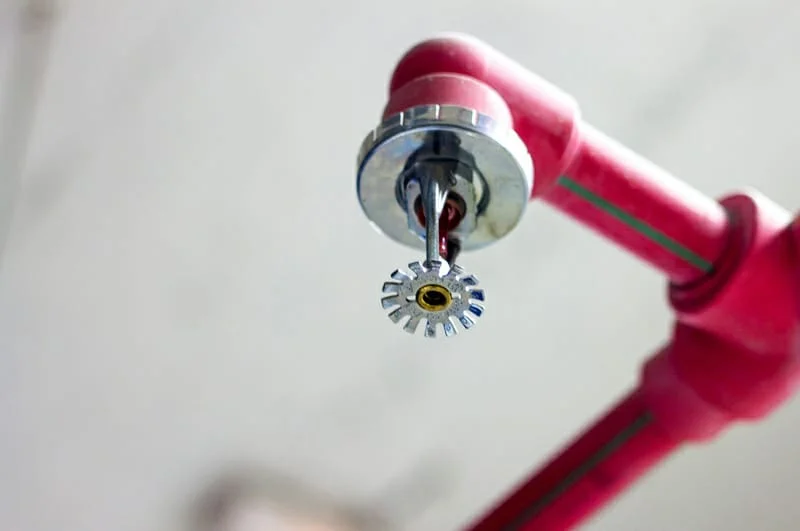
A fire sprinkler system is a network of pipes, valves, alarm devices and heat-responsive sprinkler heads installed throughout a protected area.
When sufficient heat reaches a sprinkler head, its heat-sensitive element operates and allows water to discharge over the affected area. Sprinkler heads normally respond to heat rather than ordinary smoke, cooking vapour or small changes in room temperature.
In most conventional sprinkler arrangements, individual sprinkler heads operate independently. This means the sprinkler closest to the fire may activate while the other heads remain closed unless heat reaches them as well.
The discharged water can help:
- Control fire development
- Reduce the spread of flames
- Limit damage to the surrounding property
- Support safer occupant evacuation
- Improve conditions for emergency responders
- Prevent a small fire from becoming a larger incident
The effectiveness of the system depends on correct hazard classification, hydraulic design, water pressure, sprinkler spacing, installation quality and ongoing maintenance.
Which Types of Fire Sprinkler Systems Can We Install?
NFPA identifies wet pipe, dry pipe, pre-action and deluge as common sprinkler-system types. The correct choice depends on the building environment, fire risk, operational sensitivity and applicable approval requirements.
How Does a Wet Pipe Sprinkler System Work?
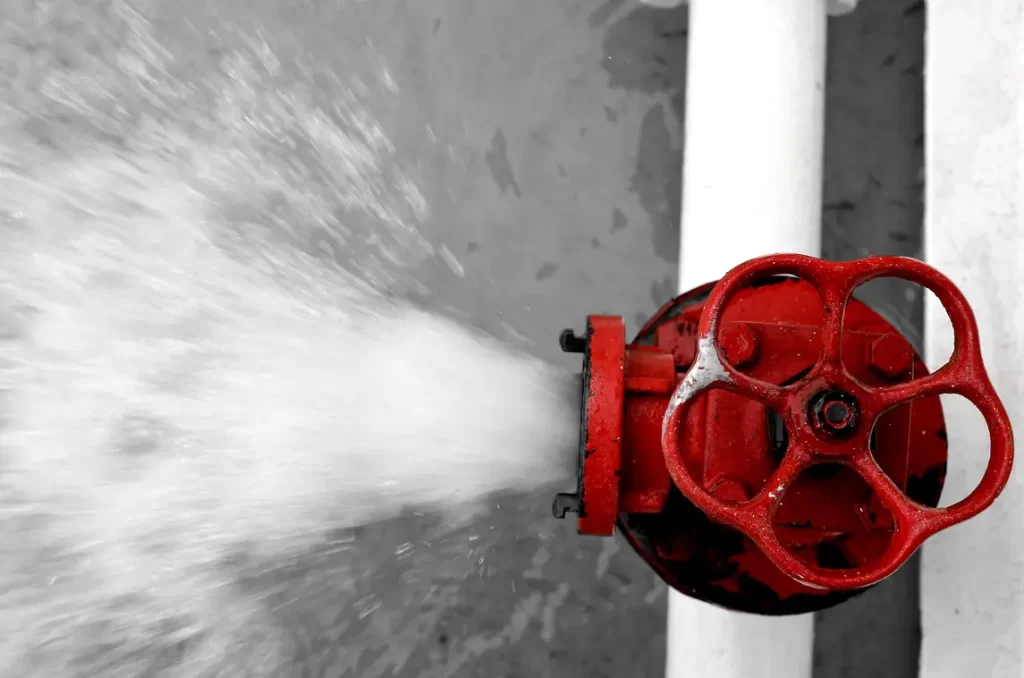
A wet pipe system contains pressurized water inside the sprinkler pipes at all times.
When a sprinkler head operates, water can discharge without waiting for the pipe network to fill. This simple operating method makes wet pipe systems suitable for many regularly occupied buildings where the pipes are not exposed to freezing conditions.
Wet pipe systems are commonly considered for:
- Offices
- Hotels
- Residential buildings
- Shopping centres
- Schools
- Hospitals
- Retail facilities
- Commercial towers
Our team evaluates the available water pressure, building height, hazard level, pipe routing and sprinkler coverage before designing a wet pipe system.
When Is a Dry Pipe Sprinkler System Suitable?
A dry pipe system contains pressurized air or nitrogen within the piping instead of water.
When a sprinkler head operates, the air pressure falls and the dry pipe valve allows water to enter the system. Water then travels through the pipe network and discharges from the activated sprinkler head.
Dry pipe systems may be considered for areas where water-filled pipes could be exposed to low temperatures or other special environmental conditions.
Because the activation process is more complex than a standard wet pipe arrangement, the design must account for water-delivery time, air pressure, system volume, valve operation and maintenance needs.
Why Would a Property Need a Pre-Action Sprinkler System?
A pre-action sprinkler system combines automatic detection with controlled admission of water into the sprinkler piping.
Depending on the approved system arrangement, a detection event may be required before water enters the pipes. The sprinkler heads still need to operate before water discharges into the protected area.
Pre-action systems may be considered for water-sensitive or operationally critical environments, such as:
- Data centres
- Server rooms
- Archives
- Museums
- Control rooms
- Telecommunications facilities
- High-value storage areas
- Certain healthcare environments
These systems require careful coordination between the fire-detection system, control panel, valves, alarms and sprinkler piping.
Prime Phoenix evaluates the protected equipment, room use, acceptable risk level and required response sequence before recommending a pre-action solution.
Where Is a Deluge Sprinkler System Used?
A deluge system normally uses open sprinkler heads or nozzles connected to a piping network controlled by a deluge valve.
When the approved detection system activates the valve, water can flow through all open discharge points in the protected zone.
Deluge systems may be used for high-hazard applications where rapid water application over a larger area is required.
Potential applications include:
- Certain industrial processes
- Flammable-liquid hazards
- Chemical handling areas
- Transformer protection
- Aircraft-related facilities
- Special manufacturing operations
- High-hazard loading areas
Deluge systems can require significant water flow. The water supply, pump duty, tank capacity, drainage and protected-zone design must therefore be assessed carefully.
When Is an ESFR Sprinkler System Considered?
Early Suppression Fast Response systems may be considered for certain warehouse and storage applications.
An ESFR design uses specially listed sprinkler heads intended to provide a high-volume response to specific storage hazards. Suitability depends on factors such as:
- Commodity type
- Storage arrangement
- Storage height
- Ceiling height
- Rack configuration
- Aisle width
- Building obstructions
- Available water supply
- Sprinkler listing requirements
An ESFR system should not be selected only because a building is described as a warehouse. The complete storage arrangement and fire hazard must first be evaluated.
What Components Are Included in a Fire Sprinkler System?
A complete sprinkler system may include several connected components. Each component must perform correctly for the system to remain dependable.
How Does the Water Supply Support the System?
The water supply must provide the required flow and pressure for the approved sprinkler design.
Depending on the property, the supply may involve:
- A dedicated fire-water tank
- A reliable utility connection
- A fire pump
- A jockey pump
- Suction and discharge pipework
- Pressure-control equipment
- Water-level monitoring
- Pump controllers
The required arrangement depends on the hydraulic demand, building height, available pressure and applicable project conditions.
Why Are Fire Pumps and Jockey Pumps Important?
A fire pump supports the required system pressure and flow when the available water supply cannot meet the sprinkler demand independently.
A jockey pump helps maintain normal system pressure and can reduce unnecessary fire-pump operation caused by minor pressure changes.
Our service can include coordination of:
- Fire-pump capacity
- Pump duty point
- Jockey-pump selection
- Controller requirements
- Pump-room piping
- Test arrangements
- Tank connection
- Alarm and monitoring interfaces

Which Pipes and Fittings Can Be Used?
Fire sprinkler piping must be selected according to the approved design, system environment and product requirements.
Common considerations include:
- Pipe material
- Pipe diameter
- Internal pressure
- Corrosion exposure
- Installation location
- Jointing method
- Support spacing
- Temperature conditions
- Authority acceptance
- Manufacturer instructions
Depending on the application and approved specification, a system may use suitable steel or other listed piping products.
Prime Phoenix plans the pipe route to support hydraulic performance while reducing unnecessary clashes with electrical, mechanical and architectural services.
What Do Sprinkler Control Valves Do?
Control valves allow sections of the sprinkler system to be isolated, supervised, tested or maintained.
A system may include:
- Alarm check valves
- Zone control valves
- Butterfly valves
- Gate valves
- Dry pipe valves
- Pre-action valves
- Deluge valves
- Test and drain assemblies
- Pressure-reducing valves
- Non-return valves
Valves must remain accessible, clearly identified and positioned according to the approved drawings.
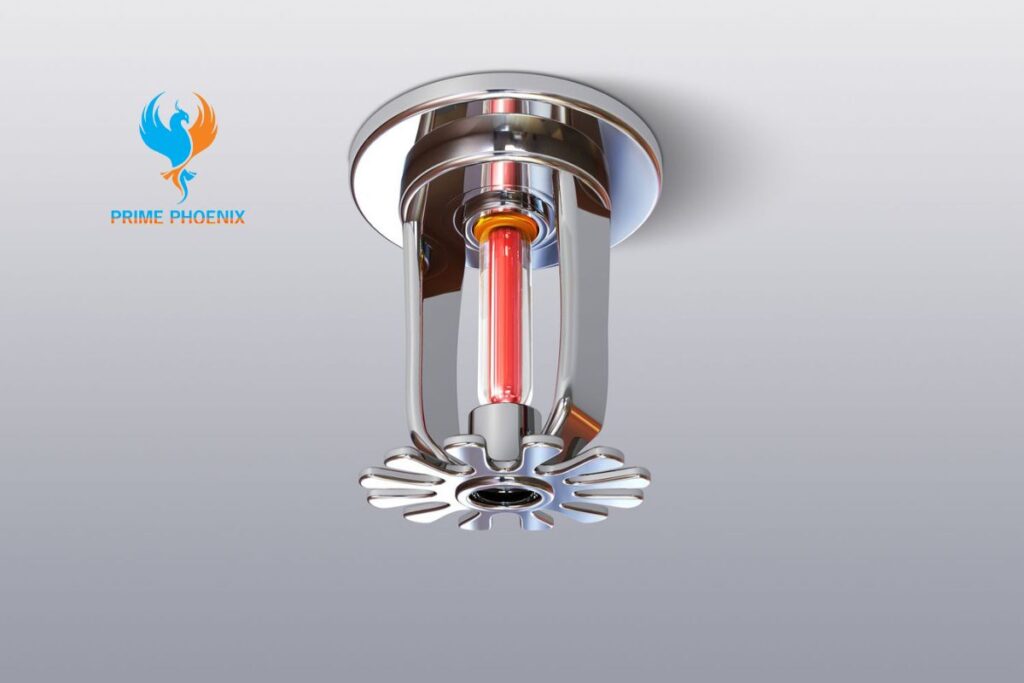
How Are Sprinkler Heads Selected?
Sprinkler heads are selected according to the intended application and approved design criteria.
Important factors include:
- Temperature rating
- Response classification
- Orientation
- Coverage
- Sprinkler spacing
- Ceiling type
- Hazard classification
- Corrosion resistance
- Storage configuration
- Obstruction conditions
- Manufacturer listing
Common orientations include:
- Pendent sprinklers
- Upright sprinklers
- Sidewall sprinklers
- Recessed sprinklers
- Concealed sprinklers
Decorative appearance should never be the only selection factor. The sprinkler must be suitable for the fire hazard and installation environment.
How Do Alarm and Monitoring Devices Support the System?
A sprinkler system may include devices that detect water movement, valve position or pressure changes.
These can include:
- Waterflow switches
- Pressure switches
- Supervisory switches
- Alarm bells
- Monitoring modules
- Control-panel interfaces
- Pump-running signals
- Valve-tamper signals
Correct alarm integration helps the building team identify system operation, faults or unauthorized valve closure.
Why Is a Fire Department Connection Required?
A fire department connection allows emergency responders to supplement the system’s water supply when required.
Its location, connection type, signage, pipe route and accessibility must follow the approved project requirements.
How Do We Design a Fire Sprinkler System?
NFPA 13 addresses sprinkler design approaches, installation and component options. UAE projects must also consider applicable UAE fire-safety requirements and conditions issued by the relevant local authority.
Prime Phoenix follows a structured design process instead of placing sprinkler heads without a complete engineering assessment.
How Do We Assess the Building and Occupancy?
The process begins with information about:
- Property type
- Building use
- Floor area
- Building height
- Ceiling height
- Room arrangement
- Stored materials
- Storage height
- Industrial processes
- Existing fire-protection systems
- Available water supply
- Future building use
A change in occupancy or storage arrangement can affect the sprinkler design. For example, a warehouse storing packaged consumer goods may require different protection from a warehouse containing plastics, chemicals or high-piled storage.
Why Is Hazard Classification Important?
Hazard classification helps determine the expected fire challenge within the protected area.
The classification can influence:
- Required water density
- Design area
- Sprinkler type
- Sprinkler spacing
- Pipe sizing
- Fire-pump duty
- Water-storage requirements
Incorrect classification can lead to an unsuitable design even when the piping and sprinkler heads appear professionally installed.
Why Are Hydraulic Calculations Required?
Hydraulic calculations are used to assess whether the system can deliver the required water flow and pressure through the selected pipe network.
The calculations may consider:
- Pipe length
- Pipe diameter
- Elevation
- Fittings
- Pressure loss
- Sprinkler demand
- Number of operating sprinklers
- Available supply pressure
- Pump performance
- Tank arrangement
NFPA’s sprinkler-plan review material specifically includes topics such as spacing and hydraulic calculations, showing their central role in system design.
How Do We Plan Sprinkler Spacing and Coverage?
Sprinkler spacing depends on several project-specific conditions.
These include:
- Sprinkler listing
- Hazard classification
- Ceiling construction
- Ceiling height
- Beams and obstructions
- Light fittings
- Air-conditioning equipment
- Storage racks
- Shelving
- Room partitions
- Mechanical services
Prime Phoenix coordinates the sprinkler layout with other building services to reduce obstructions and installation conflicts.
How Do We Select Pipe and Pump Sizes?
Pipe sizes are selected through hydraulic assessment rather than guesswork.
The design must consider the required flow at the hydraulically demanding area while accounting for pressure loss through pipes, fittings, valves and elevation.
Where the available water supply is insufficient, a fire pump or a revised supply arrangement may be required.
How Does the UAE Sprinkler Approval and Installation Process Work?
The UAE Fire and Life Safety Code of Practice is made available through Dubai Civil Defence, while approval and compliance services are managed through the relevant authority for each emirate and project. Abu Dhabi Civil Defence Authority, for example, provides preventive-safety compliance certificate services for establishments that meet applicable requirements.
The exact process can vary according to the emirate, building type, project category and scope of modification.
What Happens During the Site Survey?
Our team examines:
- Building layout
- Existing sprinkler coverage
- Water-supply conditions
- Pump room
- Fire-water tank
- Ceiling areas
- Service routes
- Storage arrangements
- Existing drawings
- Access limitations
- Areas requiring special protection
The survey helps us identify design requirements, possible installation challenges and missing information.
What Is Included in the Design Proposal?
The design proposal may include:
- Recommended system type
- Preliminary pipe route
- Sprinkler coverage approach
- Required equipment
- Pump and tank considerations
- Installation scope
- Testing requirements
- Project assumptions
- Expected authority coordination
What Is Included in the Technical Drawings?
Depending on the project, the drawings may show:
- Sprinkler-head locations
- Pipe sizes
- Pipe routes
- Riser arrangement
- Zone control valves
- Alarm devices
- Test and drain points
- Fire department connection
- Pump and tank interfaces
- Hydraulic design information
- Equipment schedules
- Installation details
How Are Materials Selected?
Materials are selected according to:
- Approved drawings
- Technical specifications
- Applicable listings
- Environmental conditions
- Manufacturer requirements
- Project requirements
- Relevant authority conditions
We coordinate pipes, fittings, valves, sprinkler heads, alarm devices and accessories as one complete system.
How Is the Sprinkler System Installed?
Our installation service may include:
- Material delivery and checking
- Setting out sprinkler locations
- Installing pipe supports
- Installing main and branch pipes
- Installing valves and alarm devices
- Connecting the water supply
- Installing sprinkler drops
- Fitting approved sprinkler heads
- Labelling and identification
- Coordinating with other contractors
- Protecting installed equipment
Work is planned to reduce unnecessary disruption to the property.
How Is the System Tested and Commissioned?
Testing may include:
- Pipe flushing
- Hydrostatic pressure testing
- Leakage inspection
- Valve-operation checks
- Waterflow alarm tests
- Pressure-switch tests
- Supervisory-device tests
- Pump interface checks
- Drain tests
- Visual inspection
- Correction of identified defects
The exact test requirements depend on the approved system and applicable authority conditions.
What Documents Can Be Provided at Handover?
Depending on the agreed scope, the handover package may include:
- Approved or final drawings
- Hydraulic calculation documents
- Product data sheets
- Material certificates
- Pressure-test reports
- Commissioning records
- Equipment schedules
- Operation guidance
- Maintenance recommendations
- Inspection-related documents
The final documentation should reflect the installed system and agreed project requirements
Which Properties Can Benefit from Our Fire Sprinkler Services?
How Do We Protect Warehouses and Logistics Facilities?
Warehouse design requires close attention to:
- Stored commodity
- Packaging material
- Storage height
- Rack arrangement
- Ceiling height
- Aisle width
- Flue spaces
- Building obstructions
- Future storage changes
- Water demand
Prime Phoenix can assess warehouse risks and recommend wet pipe, ESFR or other suitable protection based on the actual storage conditions.
How Do We Protect Offices and Commercial Towers?
Office and commercial-building systems may need to coordinate with:
- Suspended ceilings
- Raised floors
- Meeting rooms
- Electrical rooms
- Server rooms
- Tenant modifications
- Fire alarm systems
- Smoke-control systems
- Building-management systems
Our service can support new installations, tenant fit-outs, floor modifications and sprinkler relocation work.
How Do We Protect Hotels and Residential Buildings?
Hotels and residential properties require sprinkler layouts that support life safety without creating unnecessary visual disruption.
The design may include:
- Concealed or recessed heads
- Corridor protection
- Apartment coverage
- Plant-room protection
- Parking-area protection
- Service-room coverage
- Common-area zoning
Every decorative sprinkler head must still meet the approved technical requirements.
How Do We Protect Shopping Centres and Retail Properties?
Retail buildings frequently change as shops are leased, renovated or combined.
Our services can support:
- New retail units
- Shop fit-outs
- Sprinkler relocation
- Ceiling modifications
- Zone extensions
- Testing after renovation
- Correction of obstructed sprinklers
Sprinkler changes should be designed and tested rather than completed as an isolated plumbing modification.
How Do We Protect Hospitals and Healthcare Facilities?
Healthcare environments require careful work planning because many areas must remain operational.
Important considerations include:
- Patient safety
- Work-area isolation
- Infection-control requirements
- Sensitive equipment
- Service continuity
- Phased installation
- Alarm coordination
- Emergency access
How Do We Protect Data Centres and Critical Facilities?
Water-sensitive facilities require a detailed assessment of:
- Equipment sensitivity
- Room layout
- Detection strategy
- Pre-action operation
- Alarm interfaces
- Business continuity
- False-release risk
- Fire hazard
- Applicable approval requirements
A clean agent system and a sprinkler system serve different protection functions. The correct combination must be determined through an approved fire-protection strategy rather than assuming that one system automatically replaces another
Can We Install a Fire Sprinkler System in an Existing Building?
Yes. Many existing properties can be retrofitted with sprinkler protection.
The retrofit process begins with an assessment of:
- Existing ceilings
- Available pipe routes
- Structural supports
- Existing fire pumps
- Water-tank capacity
- Electrical and mechanical services
- Occupied areas
- Working-hour restrictions
- Access limitations
- Required approvals
Retrofit projects may involve:
- Installing a completely new system
- Extending an existing sprinkler zone
- Replacing old pipework
- Relocating sprinkler heads
- Adding protection to renovated areas
- Upgrading valves and alarms
- Modifying the pump or tank arrangement
- Correcting non-compliant installations
Prime Phoenix can plan phased work to reduce disruption to tenants, customers and daily operations.
Why Does a Fire Sprinkler System Need Regular Inspection and Maintenance?
A sprinkler system may remain inactive for long periods, but it must still operate correctly during an emergency.
Maintenance helps identify problems before they affect system performance.
Our maintenance service can include:
- Visual system inspection
- Control-valve checks
- Pressure-gauge checks
- Pump-room inspection
- Waterflow alarm testing
- Supervisory-signal testing
- Leakage checks
- Pipe-corrosion checks
- Sprinkler-head inspection
- Obstruction checks
- Test and drain operation
- Fault reporting
- Corrective recommendations
- Maintenance documentation
Maintenance responsibilities and frequencies should follow applicable project requirements, approved maintenance plans and relevant standards. NFPA 25 is the NFPA standard associated with inspection, testing and maintenance of water-based fire-protection systems. The exact standard and edition applied to a UAE property should be verified against project and authority requirements.
Which Warning Signs Mean Your Sprinkler System Needs Service?
Arrange a professional assessment when you notice:
- Falling or unstable system pressure
- Water leakage
- Corroded pipes or fittings
- Damaged sprinkler heads
- Painted sprinkler heads
- Missing sprinkler escutcheons
- Obstructed sprinkler spray areas
- Closed or unsecured control valves
- Repeated jockey-pump operation
- Fire-pump faults
- Alarm-panel trouble signals
- Failed waterflow alarms
- Unclear system labelling
- Missing maintenance records
- Unauthorized system modifications
- New walls or ceilings affecting coverage
Do not paint, clean, straighten, modify or repair a sprinkler head manually. A damaged or questionable head should be assessed and replaced with a suitable approved product when required.
What Factors Affect Fire Sprinkler System Cost in the UAE?
A reliable quotation cannot be based only on the building’s total floor area.
The final cost may be affected by:
- Property type
- Occupancy hazard
- Building height
- Ceiling height
- Floor area
- Number of sprinkler heads
- Pipe sizes
- Pipe material
- System type
- Existing water supply
- Fire-pump requirement
- Water-tank requirement
- Installation access
- Ceiling removal and reinstatement
- Retrofit complexity
- Working-hour restrictions
- Required testing
- Authority-submission scope
- Equipment specifications
- Project timeline
A simple wet pipe extension in an open commercial area may cost less than a pre-action system for a critical facility or a warehouse system with high hydraulic demand.
Prime Phoenix prepares project-specific quotations after reviewing the building information and required scope.
Why Should You Choose Prime Phoenix for Fire Sprinkler Services?
Prime Phoenix provides a complete service approach rather than treating the sprinkler network as an isolated pipe installation.
Our approach focuses on:
- Property-specific system selection
- Clear scope assessment
- Coordinated technical design
- Hydraulic performance
- Suitable material selection
- Careful pipe routing
- Installation quality
- Testing and commissioning
- Maintenance support
- Practical customer communication
We can support property owners, consultants, contractors, facility managers and businesses with new installations, system extensions, retrofit projects and maintenance work.
All final project claims, approvals and compliance statements should be based on the actual agreed scope and documentation for the specific property
Do All Sprinkler Heads Activate at the Same Time?
In a conventional wet, dry or pre-action sprinkler arrangement, individual heat-responsive sprinkler heads normally operate when their own activation condition is reached.
A deluge system works differently because it generally uses open discharge points supplied when the deluge valve opens.
Can Smoke Activate a Standard Sprinkler Head?
A standard heat-responsive sprinkler head normally operates because of sufficient heat at the sprinkler, not simply because smoke is present.
Smoke detectors and heat detectors are separate detection devices. They may be integrated with pre-action or deluge systems where the approved design requires detection before valve operation.
Can Fire Sprinklers Be Installed While a Building Is Occupied?
Installation may be possible in an occupied building, depending on access, safety controls, working hours and the scope of work.
The project may be divided into phases or completed during evenings, weekends or approved shutdown periods.
How Long Does Fire Sprinkler Installation Take?
The duration depends on:
- Building size
- System type
- Number of floors
- Ceiling access
- Material availability
- Pump and tank work
- Authority process
- Testing requirements
- Working-hour restrictions
A site survey and project scope are needed before a realistic schedule can be prepared.
Does Every Sprinkler System Need a Fire Pump?
Not always.
A fire pump may be required when the available water supply cannot provide the flow and pressure needed by the approved hydraulic design.
The decision should be based on water-supply information and system calculations.
Does Every Building Need a Separate Fire-Water Tank?
The water-supply arrangement depends on the building, system demand, available supply and applicable authority requirements.
Some properties may require a dedicated tank and pump arrangement, while others may use a different approved water source.
Can an Existing Sprinkler System Be Extended?
An existing system may be extended when its water supply, pipe network, zoning and hydraulic capacity can support the proposed changes.
The existing drawings and calculations should be reviewed before adding new sprinkler heads or pipe branches.
Can a Damaged Sprinkler Head Be Repaired?
A damaged sprinkler head should generally be replaced with a suitable product rather than repaired on site.
The replacement must match the required type, temperature rating, orientation, response characteristics and design conditions.
Can Sprinkler Heads Be Painted to Match the Ceiling?
Sprinkler heads should not be field-painted.
Paint can interfere with the heat-sensitive element or water-distribution pattern. Decorative finishes should be selected through suitable factory-finished products where permitted by the approved design.
What Happens After a Sprinkler Head Activates?
After system operation, the property team should follow the approved emergency procedure.
The system will normally require:
- Emergency assessment
- Controlled system isolation
- Replacement of operated sprinkler heads
- Inspection of affected components
- Alarm resetting
- Pressure restoration
- Leakage checks
- Testing before return to service
- Incident and maintenance documentation
The system should not be returned to normal operation without appropriate inspection and corrective work.
How Often Should a Sprinkler System Be Inspected?
Inspection and testing frequencies depend on the equipment, approved maintenance programme, applicable standard and authority requirements.
A professional maintenance provider should prepare a schedule covering valves, alarms, pumps, gauges, sprinkler heads, pipework and water supplies.
Which Sprinkler System Is Best for a Warehouse?
There is no single system suitable for every warehouse.
The correct solution depends on:
- Commodity classification
- Packaging
- Storage height
- Rack arrangement
- Ceiling height
- Aisle width
- Flue spaces
- Building obstructions
- Available water supply
- Future storage plans
A detailed hazard and storage assessment is required before selecting the sprinkler type.
What Information Is Needed for a Fire Sprinkler Quotation?
Useful information includes:
- Building drawings
- Property location
- Building use
- Total protected area
- Ceiling height
- Storage height
- Existing fire-system drawings
- Existing pump and tank details
- Required project completion date
- New installation or retrofit scope
- Recent inspection reports
- Relevant authority comments
A site survey may still be required to confirm the actual conditions.
Do You Need a Fire Sprinkler Site Assessment in the UAE?
Prime Phoenix Fire Fighting Installation LLC provides fire sprinkler design, installation, retrofit, testing, maintenance and repair services for properties across the UAE.
Our team can assess your building, identify the appropriate sprinkler solution and prepare a clear service proposal based on your property’s actual requirements.
Contact Prime Phoenix to arrange a site survey for:
- A new fire sprinkler installation
- An existing system upgrade
- A warehouse sprinkler assessment
- A sprinkler retrofit
- Fire-pump and tank coordination
- System testing and maintenance
- Sprinkler fault investigation
- Technical support for an upcoming inspection
Protect your property with a sprinkler system designed around the building, the fire hazard and the required level of performance.