
- Ras Al Khor Industrial Area 2
- +971 4 330 2170
- +971 547919584
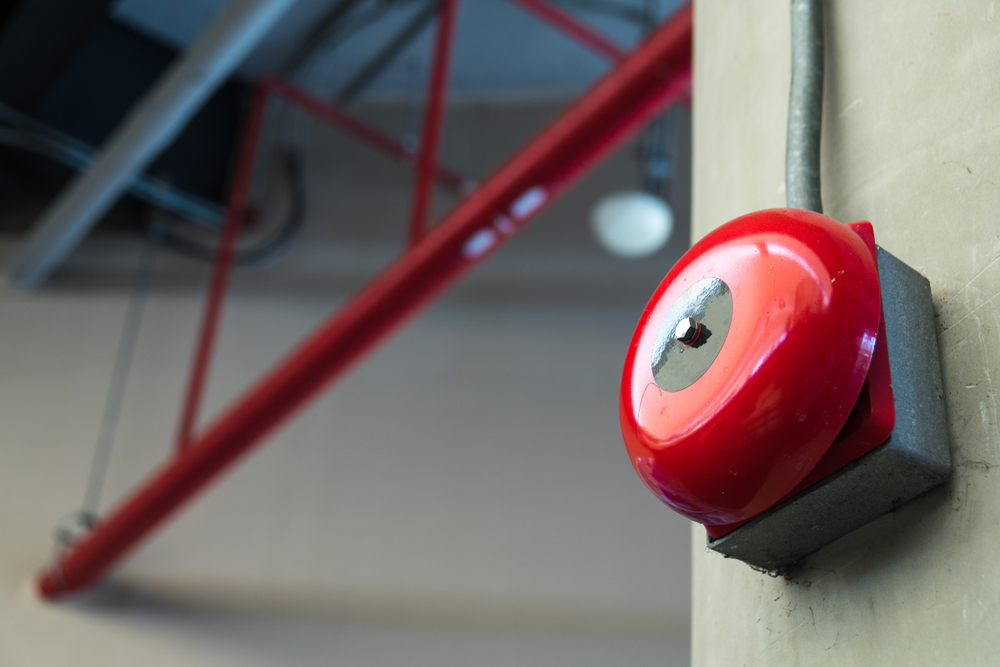
Fire safety is a critical requirement for every residential, commercial, industrial, and mixed-use property in Dubai. With rapid urban development, high-rise buildings, warehouses, hotels, healthcare facilities, and shopping centers becoming increasingly common, reliable fire detection and alarm systems have become essential for protecting lives, assets, and business continuity.
Choosing the right fire alarm company in Dubai is not simply about installing alarms. It involves ensuring compliance with Dubai Civil Defence regulations, selecting the appropriate fire detection technology, maintaining the system regularly, and implementing solutions that provide early warning and rapid emergency response.
This comprehensive guide explains everything property owners, facility managers, contractors, and business operators need to know about fire alarm systems in Dubai, including installation, maintenance, compliance requirements, costs, and best practices
Why Are Fire Alarm Systems Important in Dubai?
Fire alarm systems serve as the first line of defense against fire incidents. Their primary function is to detect smoke, heat, or fire conditions at the earliest possible stage and alert occupants so evacuation procedures can begin immediately.
Modern fire alarm systems provide several important benefits:
- Early fire detection
- Occupant safety and life protection
- Property damage reduction
- Faster emergency response
- Business continuity protection
- Regulatory compliance
- Insurance risk reduction
Whether installed in residential towers, villas, offices, warehouses, hotels, hospitals, schools, or industrial facilities, fire alarm systems play a vital role in minimizing risk and preventing catastrophic losses.
What Are the Fire Alarm Compliance Requirements Dubai?
Dubai has some of the most stringent fire safety regulations in the region. Fire alarm systems must comply with local fire and life safety requirements and undergo inspection, testing, and approval processes.
Property owners are responsible for ensuring that their fire alarm systems:
- Meet approved fire safety standards
- Are installed by qualified professionals
- Undergo regular inspections
- Receive preventive maintenance
- Remain operational at all times
- Pass required testing and certification procedures
Failure to maintain compliant fire alarm systems can result in penalties, operational disruptions, insurance complications, and increased safety risks.
For commercial properties, hotels, industrial facilities, healthcare centers, and high-rise buildings, compliance is particularly important due to higher occupancy levels and greater life-safety requirements.
What Are the Different Types of Fire Alarm Systems?
Selecting the correct fire alarm system depends on building size, occupancy, operational requirements, and budget.
Conventional Fire Alarm Systems
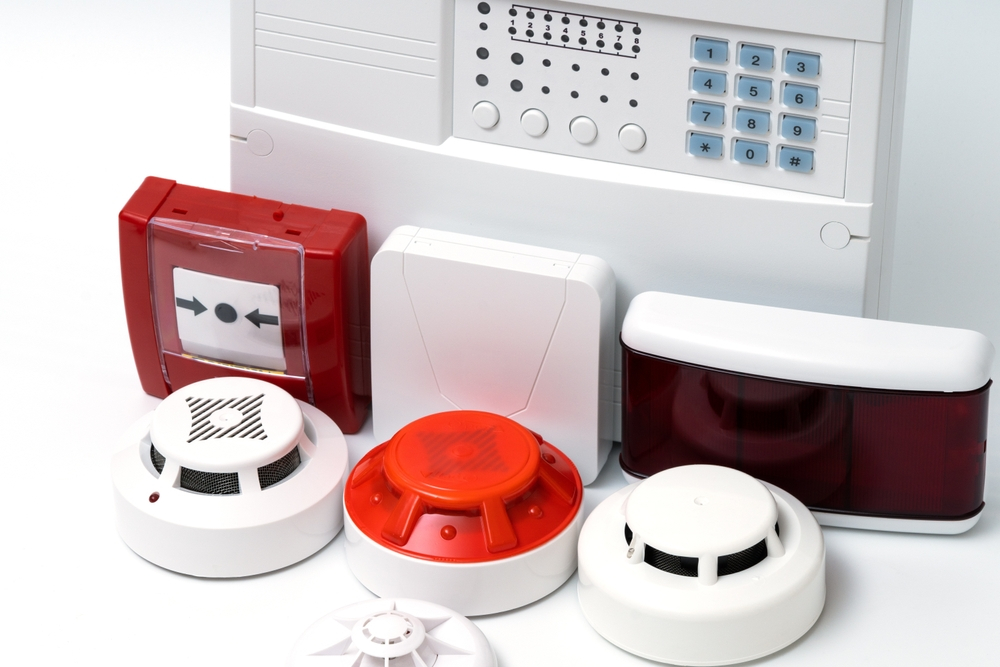
Conventional systems divide buildings into detection zones.
When an alarm is activated, the control panel identifies the affected zone rather than the exact detector location.
Advantages
- Lower installation cost
- Suitable for small buildings
- Easy operation
- Cost-effective solution
Best Applications
- Small offices
- Villas
- Retail stores
- Small commercial units
Addressable Fire Alarm Systems
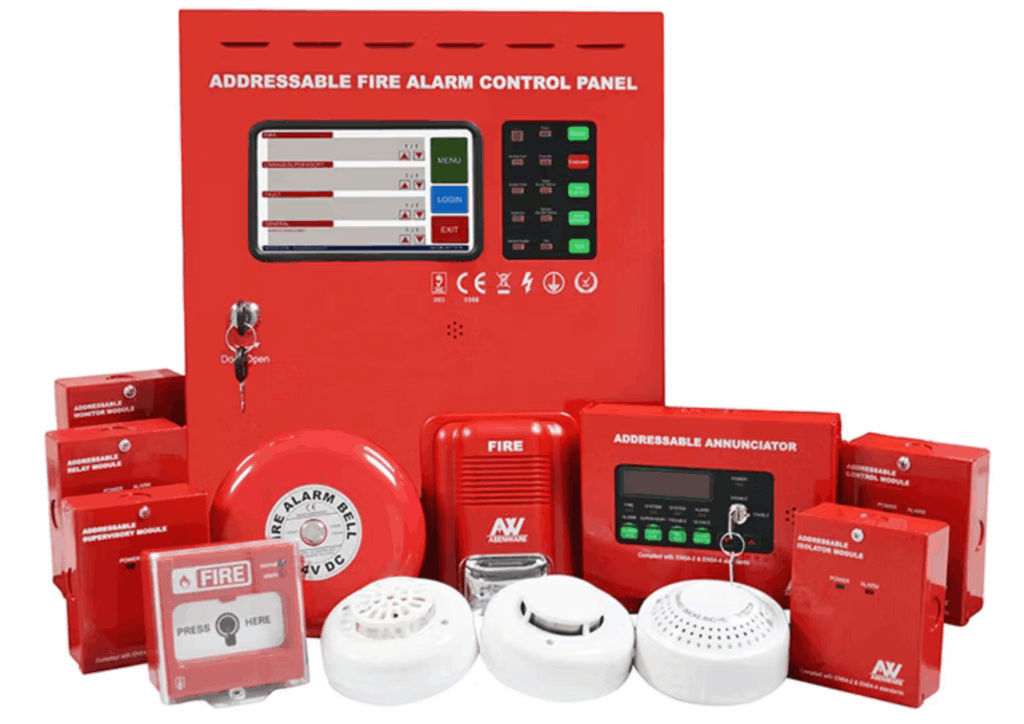
Conventional systems divide buildings into detection zones.
When an alarm is activated, the control panel identifies the affected zone rather than the exact detector location.
Advantages
- Accurate fault identification
- Faster emergency response
- Reduced downtime
- Easier maintenance
- Scalable architecture
Best Applications
- High-rise towers
- Hotels
- Hospitals
- Shopping malls
- Warehouses
- Industrial facilities
Wireless Fire Alarm Systems
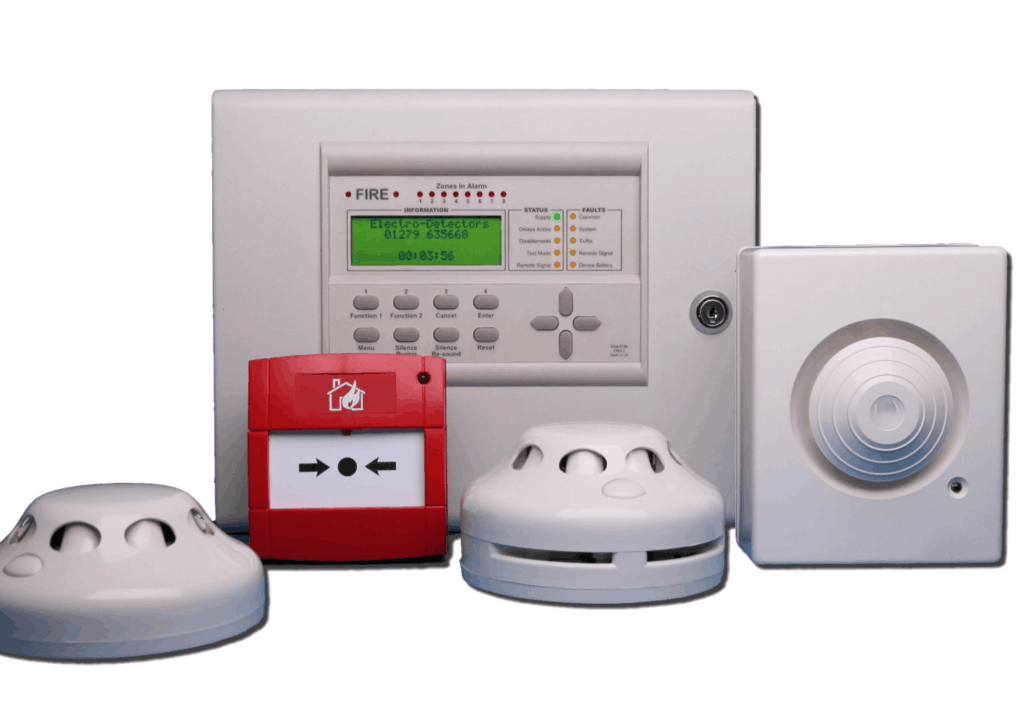
Wireless systems eliminate extensive cabling by using secure radio communication between devices.
Advantages
- Faster installation
- Minimal structural disruption
- Ideal for heritage buildings
Flexible expansion
Best Applications
- Existing buildings
- Temporary facilities
- Renovation projects
- Complex retrofits
What Are the Main Components of a Fire Alarm System?
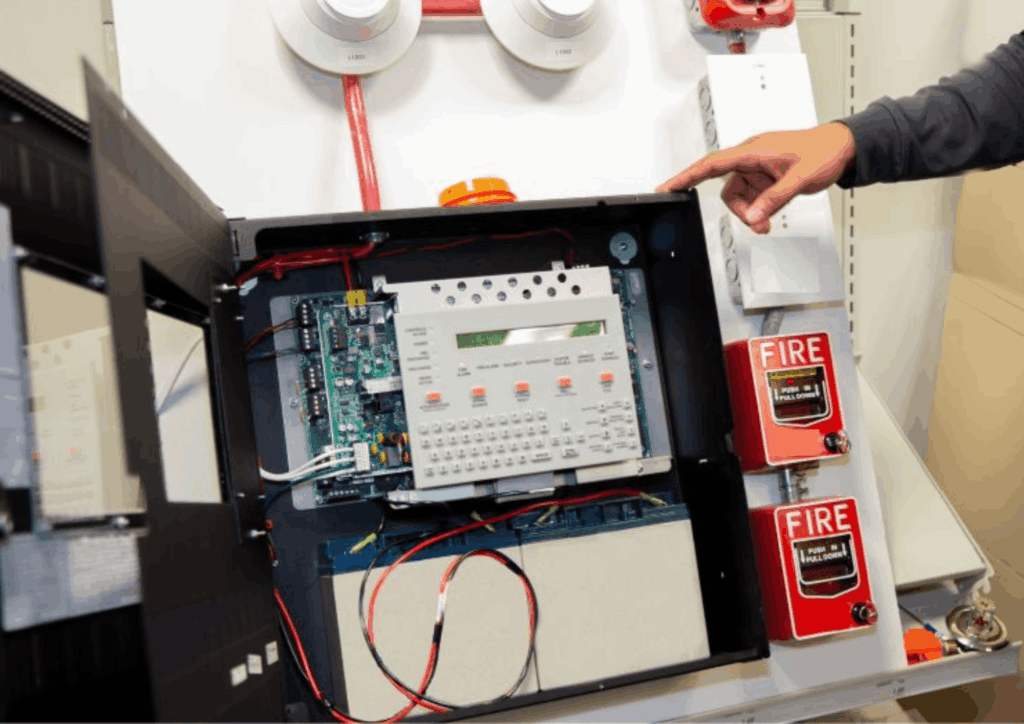
A complete fire alarm system consists of multiple integrated components designed to detect, monitor, and communicate emergency conditions.
Fire Alarm Control Panel
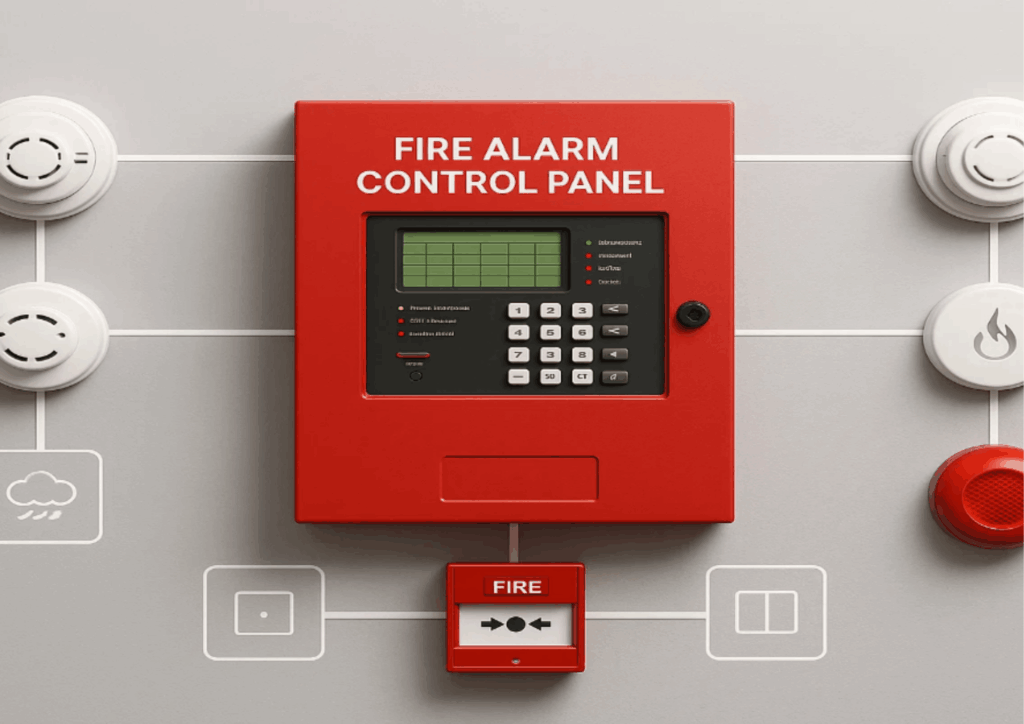
The control panel acts as the central command center.
Functions include:
- Monitoring detectors
- Processing alarm signals
- Activating notifications
- Managing system faults
- Integrating emergency systems
Smoke Detectors
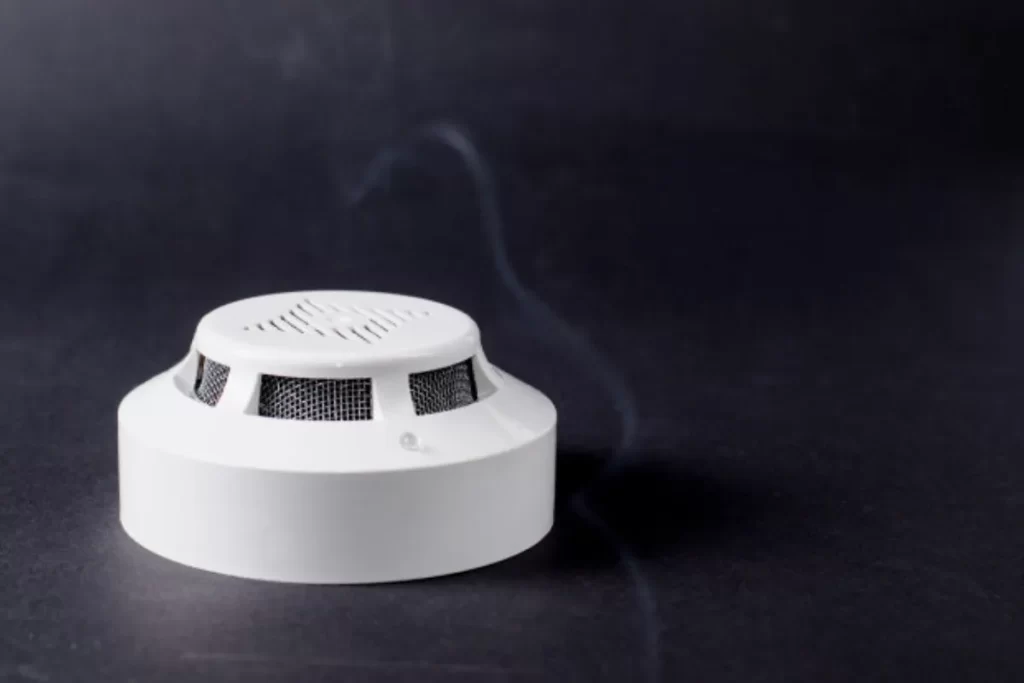
Smoke detectors identify airborne combustion particles before flames become visible.
Common detector types include:
- Photoelectric detectors
- Ionization detectors
- Multi-sensor detectors
Heat Detectors
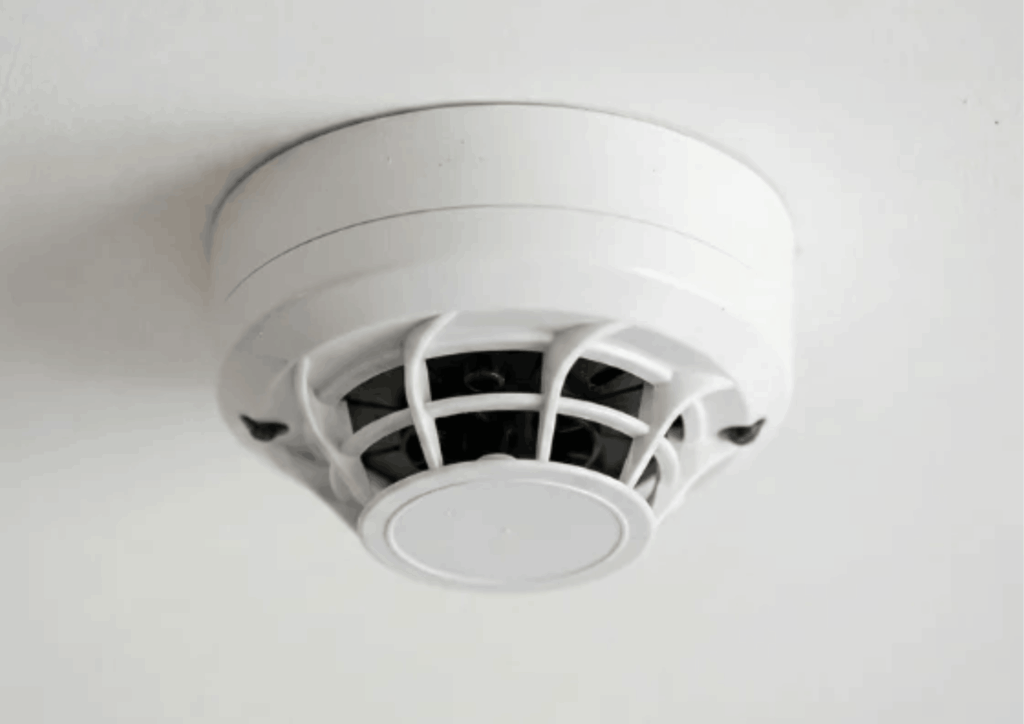
Heat detectors activate when temperatures exceed predetermined thresholds.
These devices are commonly used in:
- Kitchens
- Warehouses
- Mechanical rooms
- Industrial environments
Fire Alarm Sounders
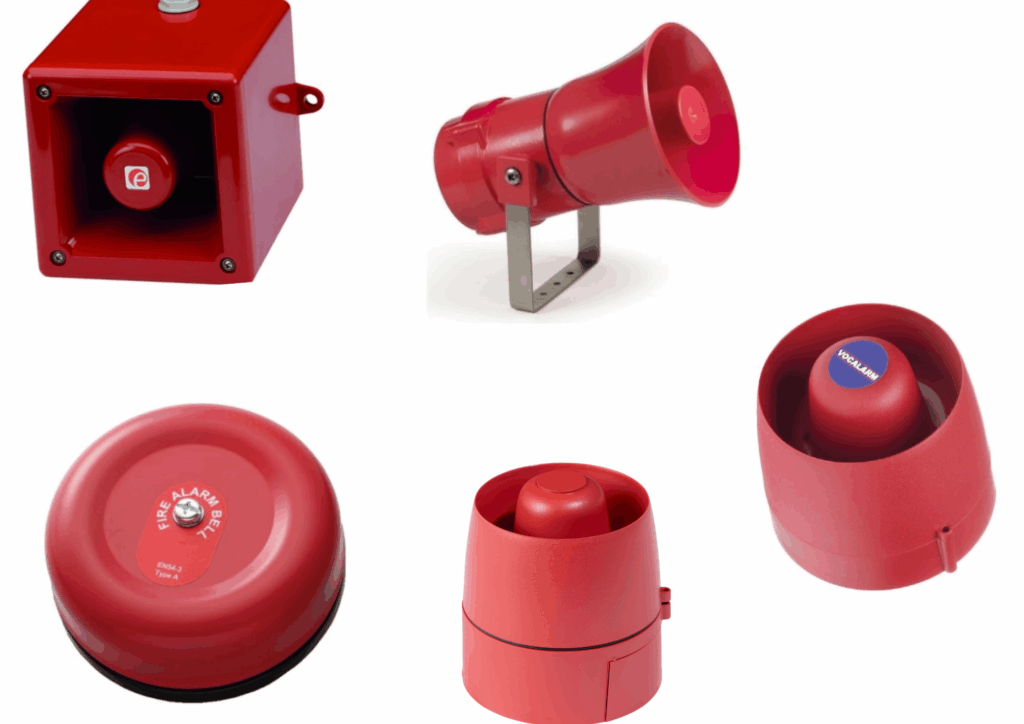
Sounders provide audible alerts that notify building occupants of emergencies.
Modern sounders may include:
- High-decibel alarms
- Visual indicators
- Strobe lights
Voice Evacuation Systems
Voice evacuation systems provide clear instructions during emergencies.
Benefits include:
- Reduced panic
- Faster evacuation
- Better communication
- Improved occupant safety
What Is the Fire Alarm Installation Process in Dubai?
Professional installation follows a structured process.
1. Site Survey
Engineers evaluate:
- Building layout
- Occupancy levels
- Fire risks
- Escape routes
- Regulatory requirements
2. System Design
Designers prepare:
- Device placement plans
- Detection zones
- Cable routing
- Integration requirements
3. Approval and Compliance
Documentation is reviewed to ensure compliance with applicable fire safety requirements.
4. Installation
Technicians install:
- Control panels
- Smoke detectors
- Heat detectors
- Sounders
- Call points
- Communication equipment
5. Testing and Commissioning
All devices undergo testing to verify:
- Detection performance
- Alarm functionality
- Fault monitoring
- Notification systems
6. Training and Handover
Building personnel receive operational training and maintenance guidance.
Why Are Fire Alarm Maintenance Services Important?
Installing a system is only the beginning.
Regular maintenance ensures reliability throughout the system’s lifecycle.
Why Maintenance Matters
Maintenance helps:
- Prevent false alarms
- Detect equipment failures
- Ensure compliance
- Extend equipment lifespan
- Improve system reliability
Typical Maintenance Activities
- Detector cleaning
- Battery inspection
- Cable testing
- Sounder testing
- Control panel diagnostics
- Communication verification
- Fault rectification
Annual Maintenance Contracts (AMC)
Many organizations use Annual Maintenance Contracts to ensure continuous compliance and scheduled servicing.
AMC programs often include:
- Routine inspections
- Emergency support
- Corrective maintenance
- Documentation management
- Compliance reporting
How Much Does a Fire Alarm System Cost in Dubai?
Fire alarm costs vary depending on several factors.
Cost Influencers
- Building size
- Number of detectors
- System type
- Occupancy requirements
- Integration complexity
- Installation conditions
Small Villas
Typically require fewer devices and lower installation costs.
Commercial Offices
Require expanded coverage and more advanced control systems.
Hotels and Hospitals
Require highly sophisticated life-safety solutions and extensive integration.
Warehouses and Industrial Facilities
May require specialized detection technologies for large open spaces.
The most cost-effective solution is not necessarily the cheapest system but the one that provides reliable protection, compliance, scalability, and long-term value.
How Do Fire Alarm Systems Integrate With Other Safety Systems?
Modern fire alarm systems often integrate with other safety technologies.
Fire Suppression Systems
Integration allows automatic activation of suppression equipment when fire conditions are detected.
Sprinkler Systems
Sprinkler systems and fire alarms work together to control fire spread and improve occupant safety.
Building Management Systems (BMS)
Integration enables centralized monitoring and facility management.
Emergency Lighting Systems
Emergency lighting supports safe evacuation during power outages and fire incidents.
How to Choose the Right Fire Alarm Company in Dubai
Selecting a fire alarm contractor requires careful evaluation.
Consider the following factors:
Experience
Look for companies with proven experience across different building types.
Technical Expertise
Ensure the team understands:
- Fire detection technologies
- Regulatory compliance
- System integration
- Maintenance requirements
Installation Quality
Professional installation directly affects system performance and reliability.
Maintenance Support
Choose providers offering long-term maintenance services and rapid response support.
Compliance Knowledge
The company should understand local fire safety requirements and documentation procedures.
What Are the Most Common Fire Alarm Problems and Their Solutions?
False Alarms
Often caused by:
- Dust contamination
- Improper detector placement
- Environmental conditions
Solution
Routine cleaning and calibration.
Detector Failure
Aging detectors may become less reliable over time.
Solution
Scheduled replacement programs.
Wiring Faults
Damaged cables can affect system performance.
Solution
Regular inspections and preventive maintenance.
Battery Issues
Backup batteries must remain fully functional.
Solution
Periodic battery testing and replacement.
How often should fire alarm systems be tested?
Testing schedules depend on building requirements, occupancy, and maintenance programs, but regular inspections are essential for reliability.
What is the difference between addressable and conventional systems?
Addressable systems identify exact detector locations, while conventional systems indicate only the affected zone.
Are fire alarm systems mandatory in Dubai?
Many building types require approved fire alarm systems to meet safety and compliance requirements.
What is included in a fire alarm maintenance contract?
Typical services include inspections, testing, preventive maintenance, emergency support, and documentation.
Can fire alarm systems integrate with sprinkler systems?
Yes. Modern systems often integrate with sprinklers, suppression systems, emergency lighting, and building management platforms.
Fire alarm systems are a fundamental component of modern building safety. Whether protecting a residential property, commercial facility, warehouse, hotel, healthcare center, or industrial operation, investing in a properly designed, installed, and maintained fire alarm system significantly improves life safety, regulatory compliance, and asset protection.